Spanish Civil War and Volunteers
Volunteers | Mechanic Breakdown | Calculator
Volunteers & the Spanish Civil War in Hearts of Iron 4: The Full Breakdown
How to grind your army to elite status without firing a shot on your own soil.
Why bother with volunteers
Volunteers are your divisions fighting on foreign turf in someone else's war. The sender isn't considered a war participant, yet you still rake in all the combat XP, commander progression, and division veterancy for sending your boys over as backup. It's a slick way to level up your divisions and doctrines before the big one kicks off.
- Divisions hit veteran rank with a +75% boost to combat stats.
- Hundreds of army, air, and navy XP pile up — free and risk-free.
- Generals snag juicy traits like Infantry Expert twice as fast.
- Doctrine research ticks along even while you're technically at peace.
When and where to send them
The sweet spot is right before your major war. The juiciest conflict is the Spanish Civil War. It fires early, drags on forever, and a bunch of nations (Germany, USSR, Italy, Portugal, you name it) have unique focuses that crank up volunteer bonuses right there.
On non-historical mode civil wars pop off all the time — you can ship volunteers to several countries back-to-back and level an entire army.
- When you send volunteers, you aren't declaring war on anyone or diving into conflicts. You're simply handing a warring nation some volunteer corps to help beat the other side.
How to send volunteers
Right-click a country at war and hit «Send Volunteers». For air wings, click «Send Air Volunteers» in the top right of the menu.
Your divisions vanish from the map for 14 days and then pop up on the receiver's turf. Air wings can be dispatched the moment the country accepts your volunteers — just select your wings, right-click any airbase in the destination country.
More on the game interface: interface guide here →
Why Spain specifically
The Spanish Civil War is the ideal playground:
- It drags on for 2–3 years — loads of time to grind.
- Both sides accept volunteers.
- Plenty of nations have focuses that hand out bonuses right there.
- The southern front lets you fight nonstop with low encirclement risk.
- Regional modifiers that stretch the war out.
Volunteer limit calculator
Ground limit: 1 volunteer division per 20 of your own divisions, but not more than 1 per 20 target provinces. Air: 100 planes per 500 of your own, but not more than 1 wing per 5 airbase levels of the target.
Frequently asked questions
Right-click a country at war and choose «Send Volunteers». In the popup pick your divisions and a commander. You need at least 30 of your own divisions, must not be at war, and need the right world tension for your ideology. Divisions vanish for 14 days, then appear at the recipient's place.
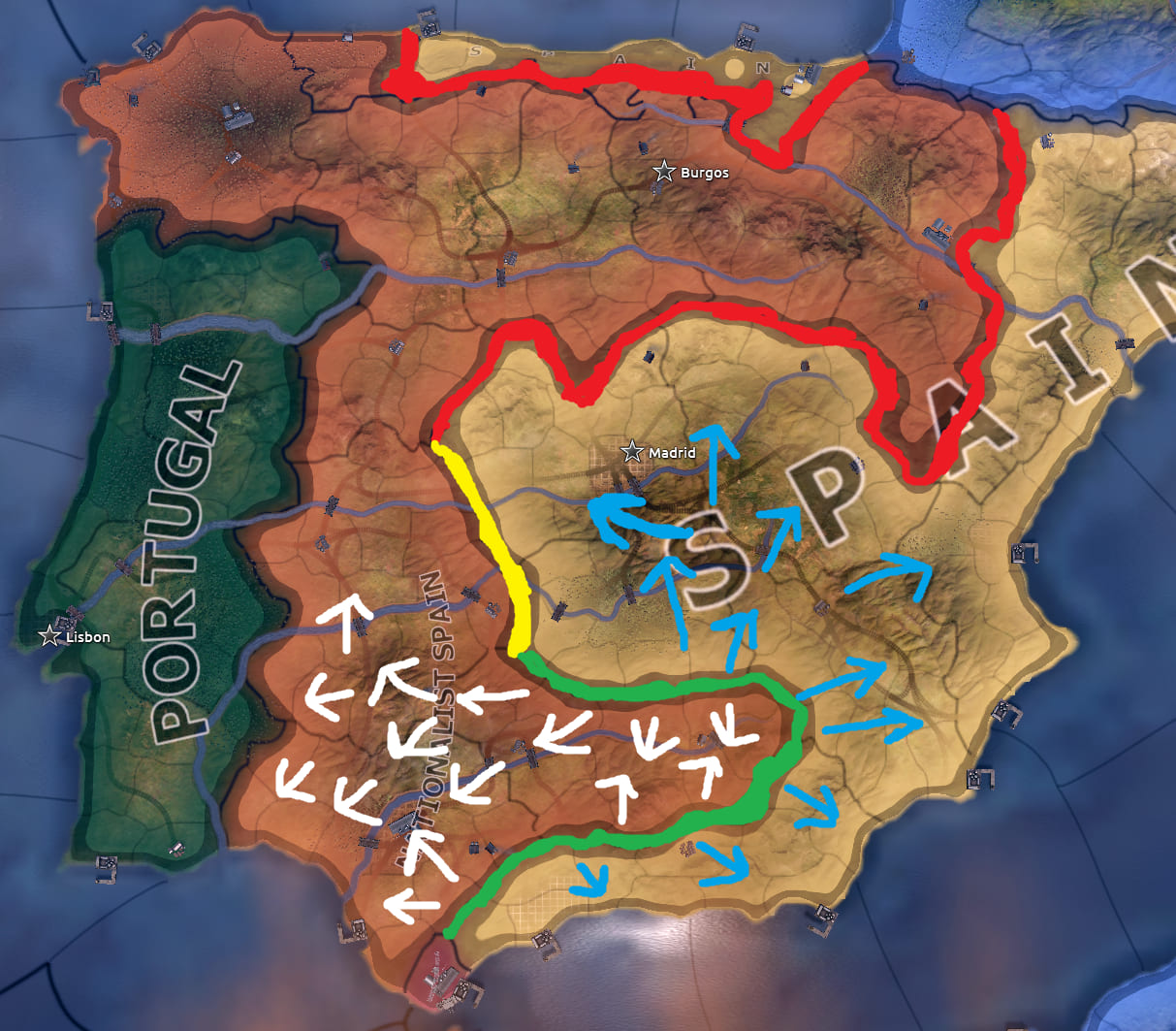
Stick to southern Spain only — the front's just right there and encirclements are way harder to pull off. Never attack with zero org, avoid salients and front bulges. As the war wraps up, pull your boys out of cities onto safe tiles (mountains, behind rivers) if you're on the losing side.
If your divisions aren't encircled and wiped, they auto-return home 14 days after the capitulation. Encircled and shattered units are gone for good.
Cheap infantry templates: 8 infantry battalions for minors, 14 for majors. You can tack on engineers and support artillery if your industry can swing it. Once they're back, swap to a combat template without increasing headcount.
Only in southern Spain. The north is a death trap: if Carlist Spain pops up your divisions can get pocketed instantly. The southern front has a normal width and fewer nasty surprises.
Double-check the requirements: you need 30+ divisions in field armies, you must not be at war, and the receiver must be at war. Ideology matters too — fascists and communists can send at any tension, neutrals at 40%, democracies at 70%.
There's no standard recall button. Volunteers come back automatically if you get into your own war or the host's war finishes. Some countries can yank them back via unique focuses. Pro tip: declare on some distant weakling (like Tibet) and all volunteers snap right back.
The cap is the lower of: your divisions divided by 20, or target provinces divided by 20. For Spain that's usually 2–9 divisions. To cheese the limit, spam a dummy template — a single cavalry battalion — to inflate your division count.
Yep, it's worth it: planes generate air XP and help unlock sub-doctrines. Limits: no more than 20% of your total air force, no more than 10% of target airbase capacity, and no more than 1 wing per 5 airbase levels. CAS is more useful than fighters if the enemy has no air force. Air wings auto-return when the war ends or you join your own war. You can also rotate planes dynamically — send some home, swap in fresh ones.
All volunteers are immediately recalled the moment you enter any war. No extra steps needed — your divisions head straight home.
Useful console commands
Requirements for sending
Ground forces
- You need at least 30 divisions.
- You must not be at war.
- The country you're sending to must be at war.
- Fascist/Communist — at any tension; Neutral — 40%; Democratic — 70%.
Air wings
- No more than 20% of your total plane count.
- No more than 10% of target airbase capacity.
- Wing limit: the lower of (your planes / 500) and (target base level / 5).
How it works
After sending, divisions go into a 14-day «buffer» and then show up in the destination country. Equipment is drawn from your stockpiles; supply comes from the host's hubs. When the war wraps up, divisions auto-return in 14 days with their XP, gear, and organization intact.
If you enter your own war, all volunteers are recalled instantly. You can't send volunteers to a country you have a truce with, or against a side you're already fighting.
Which divisions to send
For minors: 8 infantry battalions
8,000 men. Dirt cheap. After they return, you can swap to a 14-width combat template.
For majors: 14 infantry battalions
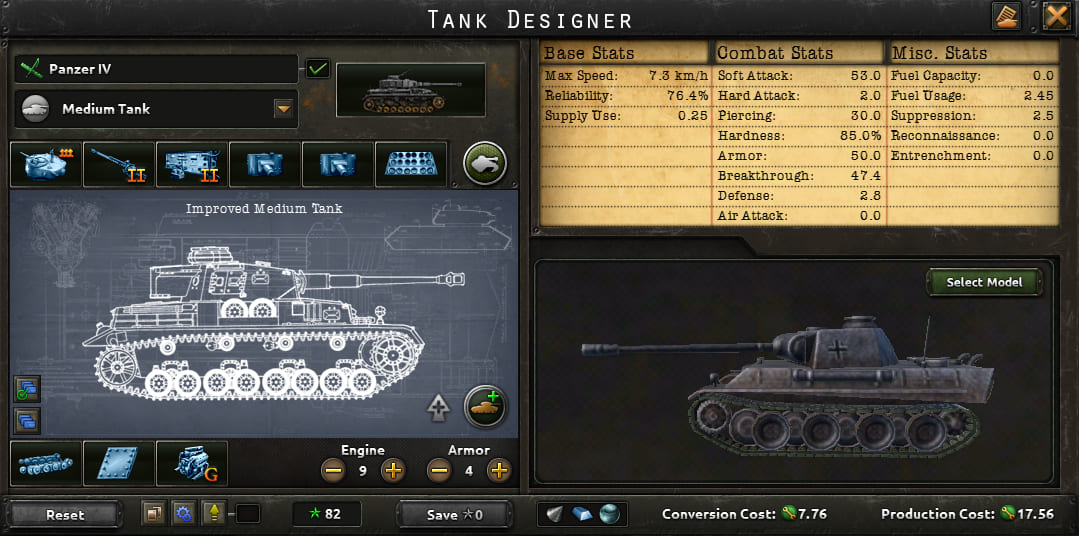
14,000 men. Pricey, but majors like Germany can afford it. Afterwards, convert to a 34-width tank division.
Golden rule: when your divisions come back, change their template to a combat one, but the new template must have no more manpower than before. Otherwise, vets get diluted with rookies and lose their level.
What to do before sending
- Create a cheap template — infantry only, maybe add engineers and support artillery if industry allows.
- Train divisions up to level 3 (regular) — use the exercise command in the order panel.
- Fully equip them with gear and manpower.
- Assign a commander — you can do it right in the new theater after arrival.
- Take focuses that boost volunteers (relevant for Germany, USSR, Italy, Portugal, and a few others).
Where to deploy on the front
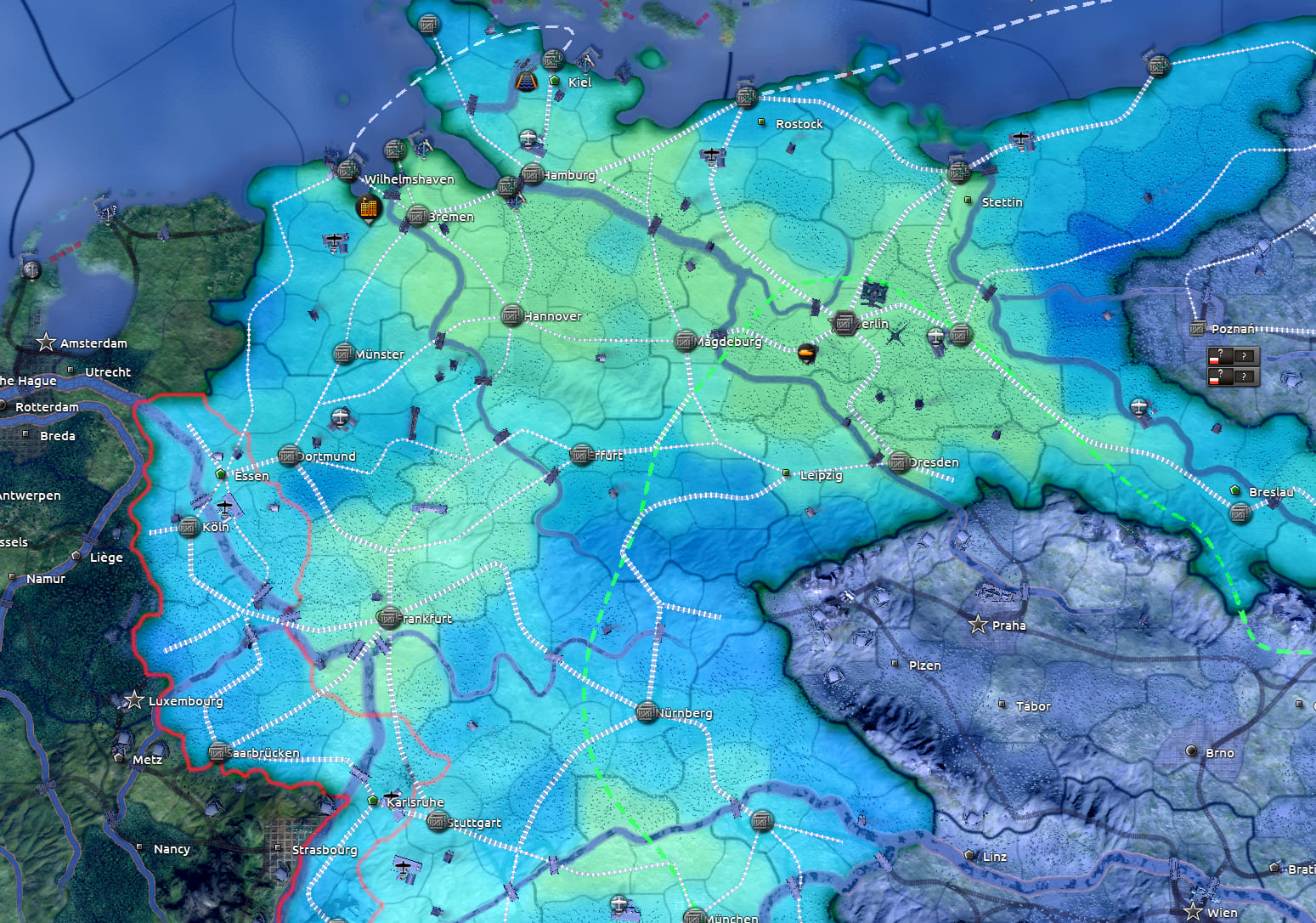
Only the south of Spain. The front width is just right, encirclement risk is lower, and you won't get jumpscared by the Carlists popping up. The northern front is sketchy — if Carlist Spain forms, your divisions can get pocketed in a heartbeat.
How to handle your volunteers
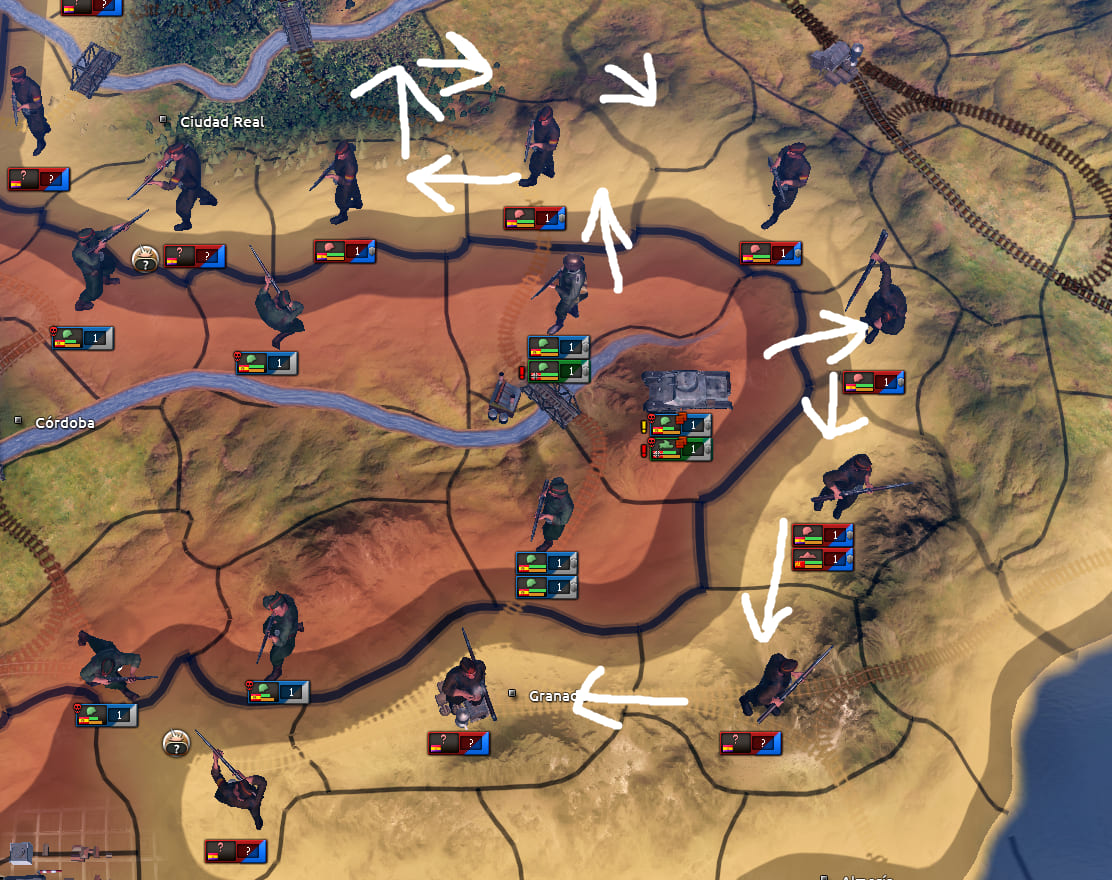
The one big rule — always be attacking. Your divisions need to be in constant combat. Standing around doing nothing is just burning potential XP. Throw them even at superior forces — gear will bleed, but for a handful of divisions your industry can cope. XP is king.
Heads up: watch that your divisions don't get stuck in an attack queue. If a tile is already being attacked by others, your division might not fit the combat width. Manually cancel the attack and pick a different target. Just don't attack enemy tiles where a fight is already raging.
Which commanders to pick and when to swap
Field Marshals
You can leave your field marshal in place — keep one for the whole campaign. They'll soak up XP from all subordinate armies and level up passively.
General grinding
Pick a general with the «Infantry Officer» trait (or the equivalent for other ground types). That trait doubles the speed of earning «Infantry Expert» (you need 1000 XP with infantry share above 80%, meaning you're leading an infantry division).
The moment a general scores «Infantry Expert» — swap them out for the next one with «Infantry Officer». You can churn out 2–4 «Infantry Expert» generals in a single Spanish campaign.
- Ideally, grab an «Infantry Officer» and grind them up to «Infantry Expert». Simple reason — most of your divisions will be infantry, and this trait gives them direct buffs. Later, just attach these generals to your infantry divisions.
Things to keep an eye on
- Don't push too deep into enemy rear — avoid salients and front bulges.
- Never attack with zero organization — a few of those will wipe your division.
- Let divisions recover to at least 20% org between attack waves.
- Keep no more than one of your divisions per tile to avoid queuing for attacks.
- If you want a quick win, mass your divisions into a fist. If you're farming, spread out along the front and attack everywhere, nonstop.
How to max out XP
- Attack as often as possible — ideally every day, on every available tile.
- Send the absolute max number of divisions — more divisions = more divisions in combat = more XP.
- Avoid downtime — your divisions should always be attacking or defending.
- Bring in the air force: CAS for ground support, fighters for air superiority.
How to level generals faster
Trait gain speed depends on what kind of divisions are under the general's command. For «Infantry Expert» the infantry share needs to be above 80% in the division. The «Infantry Officer» trait doubles the grind speed. Same logic applies to tanks, cavalry, and other types — hunt for a general with the matching officer trait.
When to grab doctrines
Right after you've saved up enough XP from volunteers to unlock one. Pick your main doctrine and start filling out the sub-doctrines. Don't wait around hoarding XP — doctrine research only ticks when a main doctrine is active.
More on doctrines and sub-doctrines: doctrine guide here →
Gameplan for different goals
For XP farming
Endless attacks across the whole front. Forget strategy — just grind divisions, yours included. The longer the war drags on, the more XP you pull in.
For a quick victory
Ball all your divisions into a fist on a narrow sector and punch through. Drive toward key objectives — the capital and major cities. Don't spread out.
the offensive guide is here
Tips & Tricks
What we get in the end
- 4–9 divisions at «veteran» level (+75% combat stats).
- Hundreds of army and air XP.
- Generals with terrain/unit-type Expert traits.
- Partially or fully unlocked sub-doctrines.
What to watch out for when the war's wrapping up
When one side starts crumbling, the front can collapse fast. If your divisions are in the losing country and hanging out in the capital or major cities, they might get encircled and wiped. A couple of weeks before the expected end, pull your troops to safe tiles — regular provinces without cities, ideally rough terrain (mountains, behind rivers). The AI often bypasses those positions.
Meta defence guide here →
How not to lose your divisions
- Steer clear of salients and front bulges — those are encirclement magnets.
- Never attack with zero organization — a couple of those will delete your division.
- Keep an eye out for new fronts popping up (like the Carlists up north).
- Station troops on safe tiles when the war is about to end.
- Don't leave divisions in cities that will be the first targets of a final offensive.
5 common rookie mistakes
Use cheap infantry templates. When they come back, swap them to combat ones — the vets will carry over.
Volunteers are a grinding tool, not a victory button. The longer the war, the more XP you rake in.
Their job is to fight nonstop, even in meat grinders. Don't sweat equipment losses.
If a tile is already under attack, your division might queue up and not earn XP. Cancel the attack and pick another target.
Always spam cheap cavalry divisions to juice your numbers. Without them, you'll send fewer troops and leave potential XP on the table.