Industry Guide
Strategy | Construction | Production
Industry in Hearts of Iron 4
Civs build mills. Mills build guns. If you don't know when to switch, you lose.
What Is Industry and Why It Matters
Industry is your civilian factories, military factories, dockyards, refineries, and infrastructure. Simply put — everything that builds and produces.
It exists so you can build efficiently, produce efficiently, and wage war efficiently. Without industry, you can't even equip your troops with rifles — that's a guaranteed loss. I highly recommend checking out the Best Division Templates →
For beginners, the key is mastering infrastructure, civilian factories, and military factories.
Golden Rule of Construction
- 1. Build infrastructure to 80–100% in your best regions.
- 2. On that infrastructure, build civilian factories until 1938.
- 3. From 1938 onward, switch to military factories.
Beginner's Foundation
Don't try to learn everything at once. Master these four things first:
Practice and Compare
That's a solid foundation. Once you've got these down, the rest comes easy.
We also recommend getting familiar with the game's interface: Interface Guide
FAQ
Civilian factories are what build military factories. The more civs you have by 1938, the more mills you'll be able to finish before the war kicks off.
Buy what you lack on the market. The penalty for resource shortages can drop your production efficiency all the way to zero.
If the enemy will bomb your factories — go Dispersed. If you expect to own the skies — Concentrated (slightly more output).
Nope. Stick to the rule: infrastructure → civilian factories → military factories. Otherwise, you'll have no weapons when war starts.
Don't panic. Just switch to the right sequence. Even if you're a bit late, you'll still outproduce the AI.
That's the percentage of your factories wasted on civilian stuff. The higher the number, the fewer factories you actually use for the war. Basically, the lower this number, the better.
Benchmark Test — Germany by September 1, 1939
Single player campaign. Left — a typical newbie run. Right — following this guide.
Without Guide
- 96 civilian factories
- 124 military factories
- 1,300 rifles/day
- 552,000 rifles stockpiled
With Guide
- 116 civilian factories
- 160 military factories
- 2,200 rifles/day
- 966,000 rifles stockpiled
With the right focuses and research, Germany becomes the #1 industrial power in the world, surpassing the USSR and the USA.
Focuses — Your Foundation
At game start, the priority is industry focuses. To find them, click the filter button in the top right of the focus tree and select "Industry".
Take them first, don't get sidetracked by politics or army until your industrial base is laid.
Prioritize focuses that reduce your Consumer Goods Factories factor.

Economy Law
Civilian Economy is poison: −30% construction speed. Get rid of it ASAP.
- War Economy — best choice if you have 50% war support.
- Partial Mobilization — fallback if war support is too low.
Aim to switch your law by summer/autumn 1936.
This law is in the politics menu, left of the political advisors.
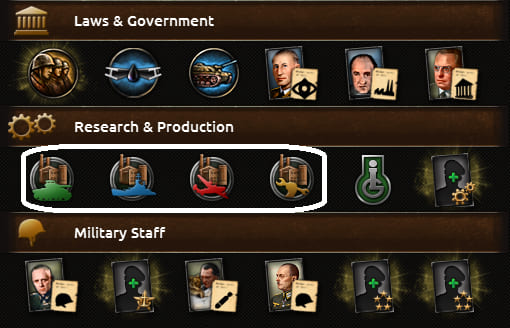
Research Order
The Industry tab has four lines. Research them strictly in this order:
industry → production → construction → synthetic oil
Research Hacks
- Basic Machine Tools, Construction 1, Electronics.
- Leave the fourth slot empty for 30 days.
- After 30 days, swap the tech in the first slot and immediately fill the empty slot with Basic Machine Tools.
Saves 30 days of research time.
Political Advisors
Hire advisors who give you:
- More political power.
- Faster construction of factories or military factories.
- Reduced Consumer Goods Factories.
- Increased stability.
Trade & Design Companies
Trade Law: while you're still building up your civs — stick to "Free Trade" or "Export Focus" for the buffs. Around 1938–1939, switch to "Limited Exports" to keep resources for your mills.
Industrial Design Companies: pick ones that reduce consumer goods, speed up industry/production/construction research, or add resources.
Decisions & Stability
Decisions have an indirect impact: for example, "Improve Worker Conditions" raises stability. High stability = more production and political power.
A handful of nations have unique nationalization decisions. Take them to grab maximum factories and resources.
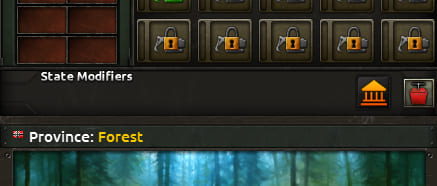
Picking Your Region
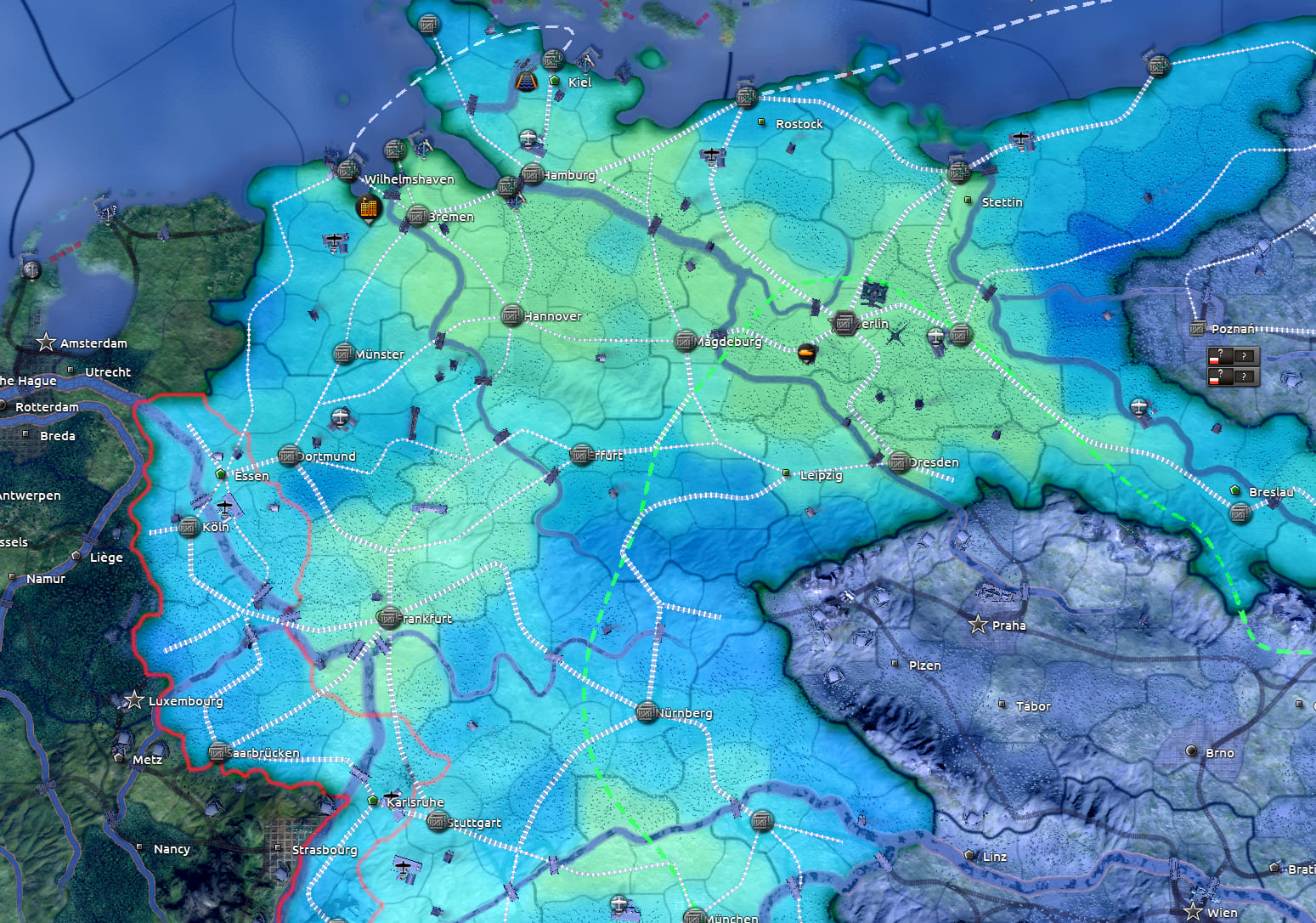
The gap between the best and worst region can be up to 70–100% efficiency. Look for:
- 3+ building slots for minors, 5+ for majors.
- At least 40% infrastructure for minors, 60% for majors.
- Dam (if present): +15% construction speed, +10% resources, +15% building slots.
- Avoid regions with negative local modifiers (like "Local construction −15%").
Infrastructure — The Foundation
While on Civilian Economy, build nothing but infrastructure in your best regions. Each level boosts construction speed by +20% and resource extraction by +15–20%.
Get it to 80–100% before you start building factories.

Civilian Factories
Once you've changed your economy law, immediately start building civilian factories. Keep going until January 1938. Build them where infrastructure is maxed out (ideally with a dam).
Every new civilian factory speeds up the next one — a snowball effect.
Military Factories — The Transition to War
From January–February 1938, switch over to military factories. Build them in the same best regions. Don't stop until the end of the game, except for short pauses for critical infrastructure (refineries, supply hubs) in early 1939.
Other Buildings
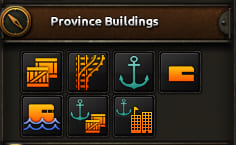
In early 1939, assess your needs: if you're short on fuel or supply, build refineries or supply hubs. Then immediately go back to military factories.
Conversion: Civs to Mils
Some countries get a massive conversion bonus, e.g., Britain going Blackshirts. When the conversion bonus is ~80%, we keep building civs until 1939, then convert 40–50% of them into military factories  .
.
Key Buildings
| Building | Purpose | Cost |
|---|---|---|
 Civilian Factory Civilian Factory |
Constructs other buildings | 10,800 |
 Military Factory Military Factory |
Produces weapons and equipment | 7,200 |
 Dockyard Dockyard |
Builds ships and convoys | 6,400 |
 Synthetic Refinery Synthetic Refinery |
Converts oil to fuel, produces rubber | 14,500 |
 Infrastructure Infrastructure |
Boosts construction speed, resources, supply | 6,000 |
Focus, Don't Disperse
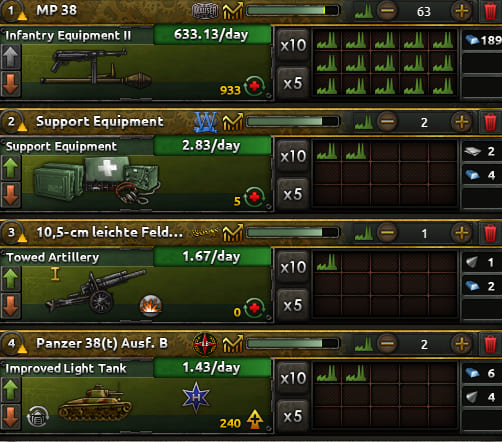
Don't try to produce a bit of everything. Identify what you need most right now and throw the bulk of your factories at it. Leave just 1–2 factories on the rest to preserve efficiency.
Production Efficiency
Every production line builds up efficiency over time. The longer it runs, the more output you get. Pulling all factories off a line resets the bonus.
Never strip a line completely if you plan to come back to that equipment later — always leave at least one factory.
How to Improve Production
- Research "Production" and "Industry" techs — direct output buff.
- Assign Design Companies and upgrade them for output and max efficiency first.
- Keep stability above 50%.
- Never let resources run out — buy what you lack.
What to Produce
It depends on your country and situation. Open the logistics tab (hotkey I) to see stockpiles and daily gain/loss. Distribute your factories based on that.
Efficiency Growth Table
This table shows why it's so important to keep at least 1–2 factories on a line permanently instead of pulling them all off.
| Line Type | Day 1 (units/day) | After 1 Year (units/day) | Increase % |
|---|---|---|---|
| Infantry Equipment | 1.0500 | 4.8900 | +365.7% |
| Support Equipment | 0.1337 | 0.5786 | +332.8% |
| Artillery | 0.1543 | 0.6814 | +341.7% |
| Anti-Air | 0.1380 | 0.5971 | +332.7% |
| Trains | 0.0075 | 0.0367 | +386.7% |
| Trucks | 0.2100 | 0.9257 | +340.8% |
| CAS | 0.0230 | 0.1020 | +344.3% |
| Fighters | 0.0271 | 0.1107 | +308.0% |
Occupation
After taking enemy territory, change the occupation law and garrison template.
- Create a template with 1 cavalry battalion (costs 5 army XP).
- In Politics (country flag) → Occupation → switch the garrison template to that cheap one.
- For regions with 2+ factories, set the law to "Forced Labor" (+25% factories from the region).
- For regions with valuable resources — "Harsh Quotas" (+40% resources from the region).
Design Companies
Assign design companies to your production lines. First, grab upgrades for production output and max efficiency, then combat stats.
If you see a green checkmark when assigning production — assign the design company. If it's grey, there's no matching company. If a company icon is already there, you're good.
Quick Reference
- Infrastructure → civilian factories (until 1938) → military factories (after 1938).
- Research priority: industry → production → construction.
- Occupation: Forced Labor / Harsh Quotas + 1 cavalry template.
- Production: concentrate, don't spread out.
- Economy Law: War Economy or Partial Mobilization as early as possible.
Useful Console Commands
Common Beginner Mistakes (10 Errors)
What to Build
Infrastructure → civilian factories → military factories. In 1939, if necessary — refineries, supply hubs.
Where to Build
In regions with maximum infrastructure (80–100%) and preferably a dam. Avoid regions with negative local modifiers.
How to Produce
Concentrate your factories on the main need, leaving 1–2 on other lines to keep efficiency alive.
Golden Rules
- Infrastructure first, then factories.
- Civilian factories until 1938, then military factories.
- Research priority: industry → production → construction.
- Change your economy law as early as possible.
- Don't spread out production; watch the logistics tab (I).
Training Goal
Start a game as Germany in 1936. Aim to have 180 total factories by September 1, 1939. If you manage that, you're no longer a beginner. Hardcore goal — 200–220 factories.
Even if you don't execute everything perfectly, you'll still be ahead of 80% of players. This guide gives you the cushion to make mistakes and still come out on top.